
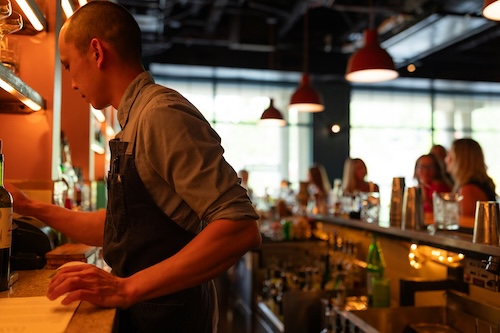
Picture a Friday night at one of your busier venues. The bar is three deep, the till is ringing steadily, and by close the bottle count in the well doesn't match what the register says should be there. Nobody can tell you, on the spot, whether that's over-pouring, a miscount at the last stocktake, a bottle that broke and never got logged, or something walking out the back door. By Monday, the variance report either doesn't exist or shows up too late and too vague to actually investigate.
Now multiply that by every bar in your group, each running its own slightly different version of "close enough."
Food cost is genuinely the harder problem to solve: hundreds of recipes, ingredient substitutions, portion drift across every venue. Beverage looks simple by comparison, count the bottles, know what got poured, and most operators treat it that way. That apparent simplicity is exactly why it gets left running on spreadsheets and gut feel long after real software has gone into the kitchen side. And because food cost is the harder, more urgent problem, most inventory software was built to solve that first, then had beverage bolted on as an afterthought, not designed around how a bar actually sells.
Why does beverage inventory software often fail at the bar?
Most inventory software fails at the bar because it forces every single drink, including a bottled beer or a glass of house wine, to be built and maintained as a full recipe before the system will track it. That works reasonably well for a plated dish with six ingredients. It breaks down fast behind a bar pouring wine by the glass, beer by the bottle, and spirits by the nip, across a wine list and back bar that might run to hundreds of individual products.
The result is one of two outcomes, and both are bad. Either someone spends hours building recipe cards for products that were never really "recipes" in the first place (a Corona is not a recipe), or the bar simply gets skipped and stock control quietly becomes a kitchen-only exercise. Multi-venue groups feel this more acutely, because the setup work multiplies across every site, and the shortcut of "we'll get to the bar later" tends to become permanent.
What mistakes do most multi-venue operators make when choosing beverage inventory software?
The most common mistake is choosing a system built for kitchen recipe costing and assuming it will handle beverage the same way, only to discover months in that the setup burden makes bar stock control impractical across more than one or two sites. A close second is buying a specialist bar-only tool that never talks to the food side, leaving you back where you started: two systems, two logins, and two sets of numbers that don't reconcile to each other or to the till.
A few other patterns show up repeatedly once groups scale past a handful of venues:
- Treating "we'll do a stocktake eventually" as a substitute for ongoing tracking, so variance is only ever discovered weeks after it happened, when there's no way to trace the cause.
- Choosing a tool based on how many features it has on paper, rather than whether a venue manager can actually open it, understand a variance, and act on it without waiting on a head-office specialist.
- Not checking whether product revenue reconciles back to the POS. If beverage sales in the software don't match what was actually rung up, every report built on top of that number is quietly wrong.
- Assuming a supplier substitution (a different pack size, a swapped brand when the usual one is out) can be handled later, when in practice it needs to be handled the moment stock is ordered or received, not set up in advance as a new item.
What does good beverage inventory management actually look like across multiple venues?
Good beverage inventory management means every site sells and stocks-counts drinks the same way, product revenue reconciles automatically back to the POS, and a venue manager can see a variance and understand why it happened without needing a dedicated inventory specialist to translate it for them. It should feel like an extension of how you already run food cost, not a separate, harder system bolted on beside it.
In practice, that means a handful of things need to be true at once. Selling a portion of a product, a nip of gin, a glass of pinot, a schooner of tap beer, needs to work without first forcing that product into an artificial recipe. Stock counts need to roll up across every venue into one view, so head office can see which sites are running tight and which are leaking, rather than waiting on a spreadsheet from each site manager. And when a supplier changes a price or a delivery doesn't match the order, that needs to flow through to cost of goods automatically, not sit unnoticed until someone eventually reconciles an invoice by hand.
The groups that get this right treat beverage with the same discipline as food: standard pour sizes, prices that update when supplier costs change, and a variance report that's specific enough to actually investigate, not just a number that makes you wince.
How can bar managers standardise recipes and pricing across multiple locations?
Bar managers standardise recipes and pricing across multiple locations by treating every pour, a nip of spirits, a glass of wine, a bottled beer, as a portion of a shared, centrally-managed product rather than a one-off local decision, so the same drink is built and priced the same way at every site. The pour size, the sell price and the supplier cost all live in one place and update everywhere at once, instead of one venue quietly running a bigger nip or an outdated price because a change never made it past that site's own notice board.
This matters most when supplier pricing shifts or a new product line goes on the menu. A centrally-managed system rolls that change out to every venue immediately, so head office isn't relying on every bar manager to remember to update their own price list, and a manager can see at a glance that their venue matches the rest of the group rather than needing to check.
How does software actually fix beverage stock control across venues?
The right software fixes beverage stock control by letting every venue sell and count drinks the way bars actually work, by portion, not by manufactured recipe, while still rolling everything up into one connected view of stock, sales and cost of goods across the whole group. That's a materially different job to kitchen recipe costing, and it's worth choosing (or checking) software with that distinction in mind rather than assuming "inventory software" is one undifferentiated category.
This is exactly the gap Loaded was built to close on the beverage side. You can sell a portion of an item directly, 150ml of wine, 500ml of beer, a 30ml nip of spirits, with no recipe build required first, so bringing a full wine list or back bar online doesn't turn into a weeks-long setup project. Product revenue reconciles back to your POS automatically, so the beverage numbers you're looking at actually match what was rung up. And because it sits in the same system as your food cost, labour and reporting, a venue manager gets one place to see the whole picture, not a second login for the bar that nobody quite trusts.
If you're currently comparing named platforms rather than just the category, our detailed breakdowns of how Loaded compares to Restoke and how Loaded compares to Supy go into the specifics, including exactly where each one handles (or doesn't handle) beverage stock. For a side-by-side look across food costing and inventory features together, see the full comparison on our Food Costing & Inventory Management Software guide.
What should you do next?
Start by counting how many products behind your bar currently have to be forced into a "recipe" just so your system will track them, and ask whether that setup burden is the reason beverage stock control keeps slipping at more than one of your venues. If the answer is yes, it's worth seeing how a system built to sell by the portion, not the recipe, changes that.
Book a free, zero-pressure 30-minute demo and we'll walk through your actual bar setup, not a generic pitch, and show you what beverage stock control looks like when it's built for how bars actually sell.
For the food-side companion to this guide, see Menu Costing Software: What to Look for Before You Switch, and for the broader stock control picture across a group, see Multi-Venue Stock Control for Hospitality.
Frequently Asked Questions
Why does beverage inventory software often fail at the bar?
Most inventory software fails at the bar because it forces every single drink, including a bottled beer or a glass of house wine, to be built and maintained as a full recipe before the system will track it. That works for a plated dish with several ingredients, but breaks down behind a bar pouring wine by the glass, beer by the bottle, and spirits by the nip across hundreds of products.
What mistakes do most multi-venue operators make when choosing beverage inventory software?
The most common mistake is choosing a system built for kitchen recipe costing and assuming it will handle beverage the same way, only to find the setup burden makes bar stock control impractical across more than a site or two. Other common mistakes include relying on periodic stocktakes instead of ongoing tracking, choosing on feature count rather than usability, and not checking whether beverage revenue actually reconciles back to the POS.
What does good beverage inventory management actually look like across multiple venues?
Good beverage inventory management means every site sells and counts drinks the same way, product revenue reconciles automatically back to the POS, and a venue manager can see a variance and understand why it happened without needing a specialist to translate it. It should extend the same discipline already applied to food cost, not add a separate, harder system beside it.
How can bar managers standardise recipes and pricing across multiple locations?
Bar managers standardise recipes and pricing across multiple locations by managing every pour as a portion of a shared, centrally-managed product, so the pour size, sell price and supplier cost live in one place and update at every venue at once, rather than each site keeping its own version.
How does software actually fix beverage stock control across venues?
The right software fixes beverage stock control by letting every venue sell and count drinks by the portion rather than by manufactured recipe, while rolling everything up into one connected view of stock, sales and cost of goods across the group. This is a different job to kitchen recipe costing and is worth evaluating separately rather than assuming all inventory software handles it the same way.
Is beverage inventory management different from food inventory management in software terms?
Yes. Food inventory is naturally recipe-based, a dish is built from multiple costed ingredients, while most beverage sales are a single product sold by the portion (a glass, a bottle, a nip). Software that forces beverage into the same recipe-first model as food creates unnecessary setup work and is a common reason bar stock control lags behind food cost control in multi-venue groups.
See how Loaded can work for your business
If you’ve never seen Loaded in action, jump over and book a demo with us. 30 minutes is all we’ll need to show you the magic!


More Profit
Making money doesn’t happen by accident! Learn how to tune your business and improve your bottom-line.



More Success Stories
Get inspired by stories from real Loaded customers who run thriving hospitality businesses.




More Labour
Get tips for optimising your staff’s time, and for managing your team effectively.


.jpg)
More Culture
Making money doesn’t happen by accident! Learn how to tune your business and improve your bottom-line.



More Design
Making money doesn’t happen by accident! Learn how to tune your business and improve your bottom-line.

More Design
Making money doesn’t happen by accident! Learn how to tune your business and improve your bottom-line.

More Design
Making money doesn’t happen by accident! Learn how to tune your business and improve your bottom-line.


Season 2: Spring Bootcamp for a Money-Making Summer
We've poured our 100+ combined years of hospitality experience into a series of live and recorded webinars that will be your bootcamp for a money-making summer.