

Why Consistency Is the Hardest Thing to Maintain as You Grow
When you run one venue and you are present every day, you are the consistency system. You notice when something is off and you correct it in real time. Your standards exist in your head, in your habits, and in the specific way you run your floor. They work because you are standing in the middle of them.
Adding a second venue stretches this but doesn't break it. Most operators can keep one additional site on track through a combination of good hires and regular visits. The third venue is where the model starts to fail. And the fourth is usually where operators finally admit to themselves that what they've been running isn't a system, it's a collection of habits held together by working hard and being on site.
The standards that existed at site one were built through your constant presence. The kitchen runs a certain way because you corrected it enough times for the habit to stick. The floor team greets a certain way because you demonstrated it repeatedly. The manager handles complaints a certain way because they watched you do it for two years.
None of that transfers automatically. None of it is documented anywhere. And once you are splitting your time across four sites, none of it can be reinforced at the frequency it took to build it in the first place.
The result is what most multi-venue operators experience as a creeping inconsistency: each venue gradually developing its own version of your standards, shaped by whoever the manager is, what they learned before they joined you, and what they feel like doing on any given day.
Where Most Groups Go Wrong
The most common response to this problem is adding people: a head of operations, an area manager, a second-in-command who spends their time visiting sites and "keeping standards up." This helps, but it doesn't solve the underlying problem. You're adding a person to compensate for the absence of a system, which means the moment that person isn't quite right, the inconsistency returns and you are back to square one.
The right approach, which is unfortunately harder work but does actually work, is building the systems themselves, documented clearly enough that a new manager at any site can run the venue to the same standard without needing to magic up anything from your personal habits or preferences.
Here is where most groups have gaps they don't realise they have:
The customer journey is not written down
Every operator has an idea of what a good customer experience looks like. Very few have documented it in enough detail that a manager who has never worked with them before could reproduce it. What happens when a guest arrives and there's a wait? Who checks in with them, when, and what do they say? What's the standard for how quickly a table gets drinks? How do you know a customer is leaving stoked with their experience? How is a complaint handled, and what tools does a floor manager have to resolve it on the spot?
Most of this lives in the operator's head or in the muscle memory of long-term staff. It doesn't survive scale, and if it's not in a system it just slowly gets worse.
Recipes and standards are not centralised
The kitchen at your original venue runs to a certain standard because your head chef has been doing it that way for three years and you've been across just about every dish at every table over that same time period. The kitchen at site three is running a slightly different version because a new chef joined eight months ago and no one re-trained them on the exact spec. Your margins on that dish are now off by three percentage points and nobody has connected those dots.
Purchasing and receiving are not consistent across sites
Each venue is ordering to their own habits. Some sites check deliveries carefully; others don't. Some managers are good at querying invoices; others accept whatever comes. The result is inconsistent costs across your group, and a COGS number you can't trust because the inputs at each site are being managed differently.
Labour is managed differently at every site
Without a shared approach to labour budgeting, each GM builds their roster based on their own instincts, their own reading of the week ahead, and whatever their habits were at their previous job. One site runs lean and hits their percentage target. Another over-rosters on Tuesdays because the manager is risk-averse. A third calls in extra casuals during service and only finds out the labour cost was over budget when the payroll arrives.
The weekly labour cost report, if it exists at all, arrives days or weeks after the fact. By the time you can see which site ran over and by how much, the shifts are already paid and the week is already gone.
Across three or more sites, this kind of unmanaged variance compounds. A group that has one site consistently running 3% over its labour target is losing real money week after week, with no mechanism to catch it in time to act.
What Good Looks Like: The Five Foundations of Consistent Operations
Operators who maintain consistency at scale are almost always running some version of these five things. None of them are complicated. All of them require discipline to maintain.
1. A documented customer journey
Write down what the experience should look like from the moment a guest arrives to the moment they leave. Not in the abstract but in operational detail. What is the greeting standard? What happens when the venue is at capacity? How are tables checked on after food arrives? What is the process for handling a complaint at the manager level?
The goal is not to script every interaction. It's to give your managers a clear workflow or matrix for what you expect, from the time a guest arrives to the time they leave, so they can train their teams to the same standard and identify when something is drifting.
2. Centralised stock, recipe and menu management
Every recipe should exist in one place, updated centrally, with costs that reflect actual purchase prices rather than the prices from when the recipe was first written. When a supplier increases the price of a key ingredient, every recipe that uses that ingredient should update automatically so you can see the margin impact before it shows up as a variance in your stocktake.
This is not a manual process at scale. With three or more venues running menus with dozens of items, managing recipe costing via spreadsheets creates the exact inconsistency you're trying to fix.
3. A consistent inwards goods process
Every delivery at every site should be checked against the purchase order on arrival. Invoices should be received into your inventory system the same day, with any price discrepancies flagged immediately. Your accounts team should reconcile supplier statements against received invoices weekly.
This sounds like basic discipline, but across a multi-venue group it's one of the most commonly missed processes. When it's done consistently, you catch overcharges, protect the pricing you've negotiated, and ensure your COGS is calculated from accurate data.
4. Labour budgeted before the roster is built, at every site
The single biggest lever for consistent labour management across a group is making the weekly budget the starting point rather than the finishing check. Before any GM opens their rostering screen, they should have a target: a percentage of forecast revenue that their labour cost needs to stay inside.
The best groups also give their GMs a simple daily accountability loop. Were sales ahead or behind budget? Did labour run over or under the roster? Two questions at the end of every shift, reported briefly to whoever is above them or included in the shift report. This creates the feedback loop that catches problems in the same week they happen rather than the same month.
When this discipline runs consistently across all sites, the weekly group report shows you labour cost percentage by venue side by side. A site running 4% over its target isn't just an abstract number — it tells you exactly where to look and gives you enough time to do something about it.
5. Weekly reporting that shows the same picture across all sites
Consistency in operations is only measurable if you have consistent data. A weekly report that shows revenue, labour cost percentage, and food and beverage COGS by site, in the same format, calculated on the same basis, is what lets you see when one site is drifting from the others.
A site running 4% higher food cost than the rest of your group is telling you something specific. It might be receiving errors. It might be recipe drift. It might be a portioning issue in the kitchen. You won't know which until you investigate, but you can only investigate when the reporting flags the variance in the first place.
How Technology Makes Consistency Achievable Across Multiple Sites
The reason consistency breaks down at scale is that the processes described above are very difficult to maintain manually across multiple sites. A centralised recipe system with live cost updates requires software. A consistent inwards goods process at every venue requires a purchase order system that everyone uses the same way. Labour budgeting across sites requires a rostering platform where targets are set before rosters are built. A weekly report that shows the same picture across all sites requires the data from all sites to flow into one place automatically rather than being assembled by a finance manager every Monday.
Loaded is built for exactly this. It connects recipe costing, stock management, inwards goods, labour management and rostering, and revenue reporting in one platform, designed specifically for hospitality groups in Australia and New Zealand. When a supplier price changes, recipe costs update across all venues automatically. When a delivery arrives at any site, it's received into the same inventory system using the same process. GMs build rosters against a labour cost target before the week starts. When you open your weekly report, you see every venue side by side on the same basis.
The operators who maintain consistency across five or ten venues are not doing it by visiting more often or hiring more area managers. They are doing it by building the right systems and using a platform that makes those systems consistent across every site.
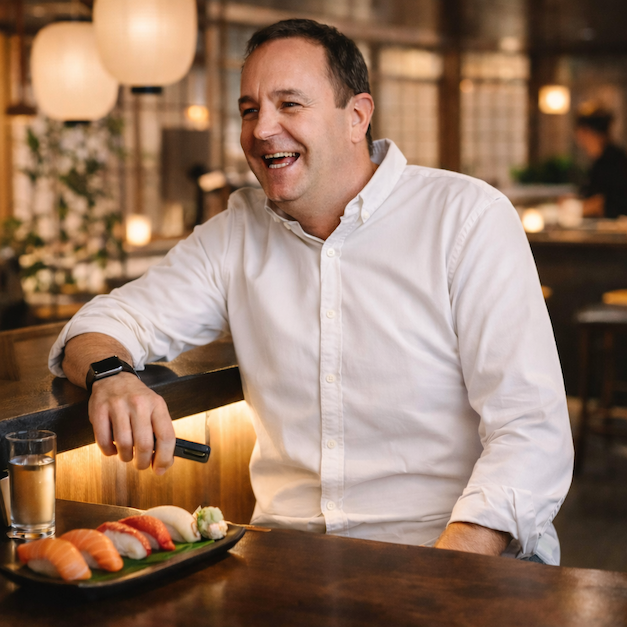
Tanoshi runs six large-format Japanese restaurants on Loaded. The biggest surprise for owner Matt wasn't the numbers, it was his managers:
"What we were surprised about was how much our staff communication improved. Managers between sites started talking the same language because they were doing everything at their venues exactly the same way. This has meant that they can help each other out more particularly if a site has an issue that they're struggling to get on top of, other staff within the group are much more likely to be able to help get it sorted." Matt, Owner, Tanoshi
If you're running three or more venues and the consistency between your sites isn't where you want it to be, it is worth 30 minutes to see how Loaded works in practice.
Frequently Asked Questions
How do you maintain consistency across multiple restaurant locations?
Consistency across multiple venues comes from documented systems rather than personal presence. The five foundations are: a written customer journey that gives managers a clear reference for service standards; centralised recipe management with costs that update automatically; a consistent inwards goods process at every site; labour budgeting that happens before the roster is built at every venue; and weekly reporting that shows all venues on the same basis so variances are visible. Groups that get this right almost always have a platform that connects all five rather than managing each one separately.
Why do standards slip between restaurant venues?
Standards slip because the processes that kept them in place at the original venue were built through the owner's presence and constant reinforcement, not through documented systems. When that presence is divided across multiple sites, the invisible instructions that held things together have nowhere to go. Each manager fills the gaps with their own habits. Over time, you get multiple versions of your standards rather than one consistent version at every site.
How long does it take to build consistent operations across multiple venues?
Most operators see meaningful improvement within 8 to 12 weeks of implementing consistent systems across their group. The two highest-impact changes are usually centralising recipe and purchase order management — these directly affect both consistency and cost, and the improvements show up in the weekly numbers relatively quickly. Cultural consistency, including service standards and customer journey, typically takes longer to embed because it depends on repeated training and reinforcement.
What is the biggest cost of inconsistency in a multi-venue hospitality group?
The most direct costs are in labour and food cost. Inconsistent labour management, where each site GMs rosters without a shared target, means overruns at individual sites that are only visible after the fact. Inconsistent purchasing and receiving processes lead to inflated COGS across the group. Most operators running three or more venues find both problems running simultaneously, often without realising the scale of the combined impact until they see the sites compared side by side for the first time.
How do you train staff to the same standard across multiple restaurant locations?
The starting point is documentation. Before you can train people consistently, you need to know specifically what you're training them to. A written customer journey, documented service steps, and a recipe system that gives every kitchen the same spec are the foundations. After that, the training process itself needs to be consistent: the same induction at every site, the same criteria for what "certified" looks like, and a manager at each site who has been trained in how to train others to the same standard.
Multi-Venue Operations Series
This guide is part of Loaded's multi-venue hospitality management series for operators running more than one site in Australia and New Zealand.
See how Loaded can work for your business
If you’ve never seen Loaded in action, jump over and book a demo with us. 30 minutes is all we’ll need to show you the magic!


More Profit
Making money doesn’t happen by accident! Learn how to tune your business and improve your bottom-line.



More Success Stories
Get inspired by stories from real Loaded customers who run thriving hospitality businesses.


More Labour
Get tips for optimising your staff’s time, and for managing your team effectively.


.jpg)
More Culture
Making money doesn’t happen by accident! Learn how to tune your business and improve your bottom-line.



More Design
Making money doesn’t happen by accident! Learn how to tune your business and improve your bottom-line.

More Design
Making money doesn’t happen by accident! Learn how to tune your business and improve your bottom-line.

More Design
Making money doesn’t happen by accident! Learn how to tune your business and improve your bottom-line.


Season 2: Spring Bootcamp for a Money-Making Summer
We've poured our 100+ combined years of hospitality experience into a series of live and recorded webinars that will be your bootcamp for a money-making summer.