
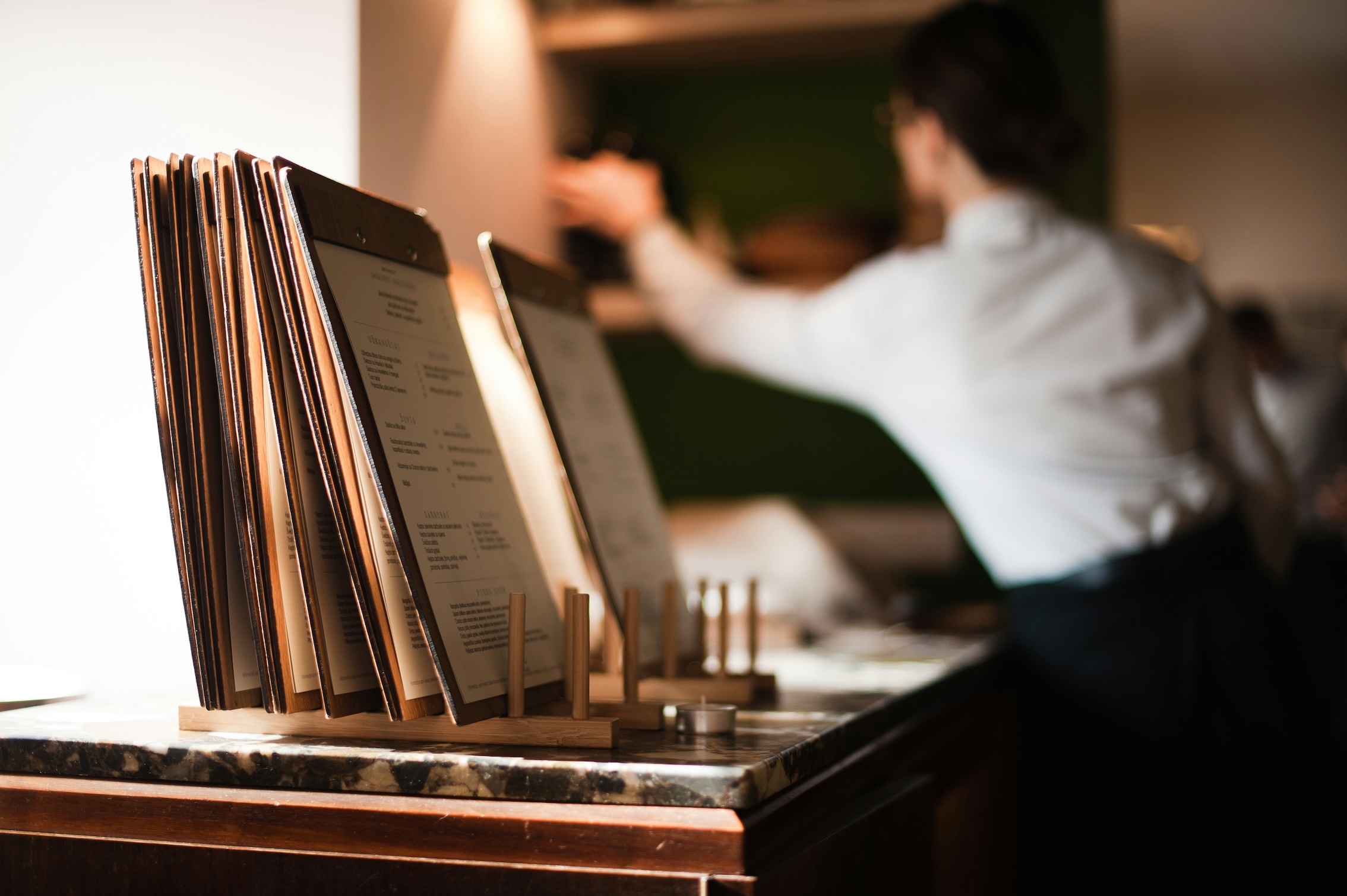
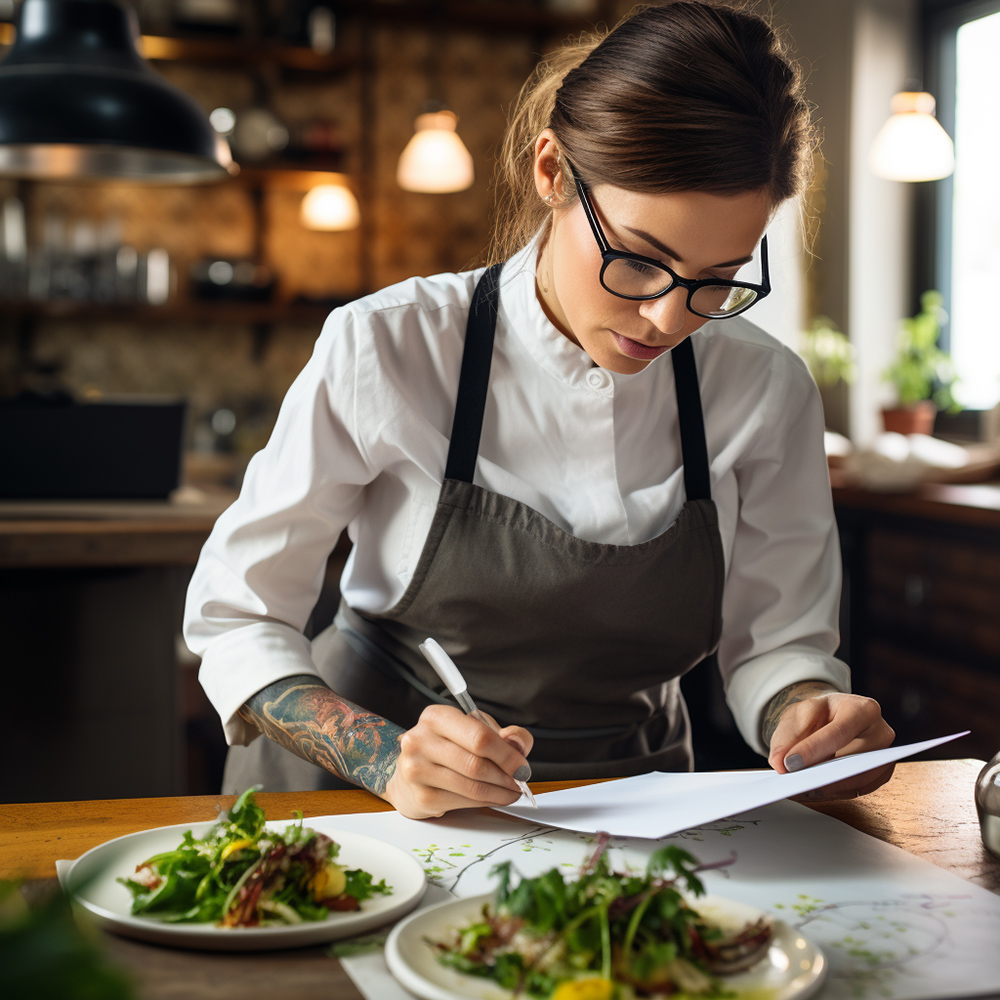
An executive chef we spoke with recently, who runs a six-site group, had just redesigned her menu with all the proven psychology baked into the changes: prices without dollar signs, a $58 tomahawk near the top of the mains list to make everything else look reasonable, a "chef's pick" box around the roast duck. Covers didn't increase. Average spend barely moved either. The duck in the box turned out to be running a 41% food cost that nobody had checked in over a year, because the supplier price had crept up twice since the menu was last costed. She'd unwittingly built a beautiful frame around a dish that was quietly one of the least profitable things on the menu.
That's the trap with most menu psychology advice. It treats every technique as if it works the same regardless of what you're actually selling. Highlight your "featured" dish and sales go up — sure, but if that dish isn't actually a high-margin item, you've just spent design effort making your business worse. The layout tricks are real. The psychology is real. But none of it does anything for your bottom line unless you know, with current numbers, which of your dishes you genuinely want to be selling more of.
This guide covers the specific psychology techniques that move average spend per head, in the order that matters, and how to tell which of your dishes deserve the spotlight before you give it to them.
Why does menu psychology matter for average spend per head?
Menu psychology matters because small, low-cost changes to layout, pricing format and description can lift average spend per head by a meaningful margin without discounting, adding more customers, or changing a single recipe — but only if the items being promoted are genuinely profitable. Industry research puts the ceiling for well-executed menu design changes at around a 27% sales lift on affected items — in our experience that's closer to a best-case outcome than a typical result, but a well-run system that keeps attention pointed at genuinely high-margin dishes can still move the needle in a meaningful way.
Average spend per head is one of the few revenue levers an operator can pull without spending a dollar on marketing or fighting for more covers. Every guest already in the building is an opportunity to be enticed into one more shared starter, one more beautiful bottle of wine, one dessert to finish off a great night out. Menu psychology is simply the practice of making that "one more" decision easier and more natural for the guest to make — through where an item sits on the page, how its price is written, and the words used to describe it.
Where operators get into trouble is treating this as a design exercise separate from the numbers. A "chef's pick" box works because it draws the eye. It does not care whether the dish inside it is a Star or a Dog on your menu matrix. If you haven't classified your menu this way, or your recipe costs are six months old, you can spend real design effort promoting the wrong dish. (If you haven't run this exercise yet, our menu engineering matrix guide walks through exactly how to sort your menu into Stars, Plowhorses, Puzzles and Dogs first.)
What mistakes do most operators make with menu psychology?
The most common mistake is applying psychology techniques to whichever dishes the kitchen is proud of or wants to sell more of, rather than the dishes the numbers say are actually worth selling more of. A close second is copying a generic list of "menu tricks" wholesale without testing whether they suit the venue.
- Boxing or featuring a dish because it's new, seasonal, or a chef favourite — not because it has the margin to justify the extra attention. A callout box increases orders on whatever's inside it. If that's a Plowhorse running thin on margin, you've just sold more of your least profitable option.
- Copying every trick from a list article onto one menu. Removing every currency symbol, adding a box around every third item, writing three lines of florid description for every dish — this reads as "selling," not "hospitality," and actually erodes the guest's trust in the menu rather than building it.
- Redesigning the menu once and leaving it. Menu psychology isn't a one-off design project. Ingredient costs shift, seasonal items rotate in and out, and a technique that worked when a dish cost you 28% to produce doesn't help you once a supplier increase has pushed it to 35%.
- Assuming the "expensive item at the top" trick works in isolation. Price anchoring only works if the anchor item itself isn't losing margin on every sale.
- Never checking whether the technique actually worked. Sales data before and after a menu change tells you whether a technique moved spend per head in your venue specifically, not just that it apparently worked in a Cornell study from a US casual-dining chain. Don't assume Australian and New Zealand diners will respond the same way as their US counterparts.
What menu psychology techniques actually increase average spend?
The techniques with the clearest evidence behind them fall into three groups: how prices are written, where items sit on the page, and how items are described — and all three work by directing attention and lowering friction, not by tricking anyone.
Price presentation. Dropping the dollar sign and decimal point (writing "32" instead of "$32.00") reduces what researchers call the "pain of paying" — the price registers less as money leaving your wallet. Nested pricing, where the number sits at the end of the description in the same size and weight as the rest of the text rather than in a bold column down the right-hand side, has the same effect: it stops guests price-comparing down a list and encourages them to choose on the dish itself.
Placement and layout (the golden triangle). Eye-tracking research consistently shows guests read a menu in a rough Z or F pattern, landing first in what's often called the "golden triangle" — the centre of the page, then the top-right, then the top-left. That's prime real estate for your highest-margin dish, not necessarily your most popular one. A callout box or subtle border around one or two items per page draws attention hard — which is exactly why it should be reserved for genuinely high-margin items, used sparingly (one or two per page, not one per section).
Price anchoring (decoy pricing). Placing one clearly premium item near the top of a section, sometimes called decoy pricing, resets the guest's sense of what's reasonable for everything below it. A $58 item on the list makes a $34 item feel like the safe, sensible choice — even if $34 would have felt steep on its own. This only works long-term if the anchor item itself carries a margin that justifies the attention it draws.
Descriptive language. Specific, sensory language — naming the origin, the method, or a point of difference ("Bass Strait salmon," "twelve-hour braised," "our nonna's recipe") lifts perceived value and gives the guest a reason beyond price to choose the dish. Vague adjectives like "delicious" or "tasty" do nothing; specificity does the work, and honest, authentic storytelling does too.
Number of choices. Guests faced with too many options in one category tend to default to something familiar rather than explore, which usually means your safest, lowest-margin seller wins by default. Keeping each category to a manageable number of options — and using the techniques above to guide attention within that shorter list — gives your higher-margin dishes a real chance to be chosen.
TechniqueWhat it doesWhere to apply itRemove currency symbols and decimalsReduces the "pain of paying" association between the number and spending money; some studies show spend lifts up to 30%House-wide pricing style, not just featured itemsNested pricingPlaces the price quietly at the end of the description in matching font weight, so guests choose on the dish rather than price-comparing down a columnAnywhere prices currently run down the right-hand side in a bold, easy-to-scan columnGolden triangle placementGuests scan menus in a rough Z or F pattern, landing first in the "golden triangle": centre, then top-right, then top-leftYour single highest-margin dish per category (confirmed via current recipe costing, not assumed)Callout box or borderDraws the eye hard and increases orders of whatever's inside itOne or two genuinely high-margin items per page only — overuse dilutes the effectPrice anchoring (decoy pricing)A premium item near the top of a section makes everything below it feel more reasonable by comparisonOne anchor item per section; only works long-term if the anchor item's own margin can support the attention it drawsDescriptive, specific languageNaming origin, method or a point of difference lifts perceived value beyond price aloneFeatured dishes only — applying it to every item on the page dilutes the effect and reads as try-hardLimited choice per categoryToo many options in one category causes guests to default to a familiar, usually lower-margin choiceKeep each category to a manageable number of options so higher-margin dishes get genuine consideration
What does a well-run approach to menu psychology actually look like?
A well-run approach starts with knowing which dishes are genuinely high-margin, then applies psychology techniques deliberately to draw attention to those specific dishes — not to whichever ones the kitchen likes best or the menu happens to be built around.
The practical sequence:
- Classify your menu first. Run your top sellers through a Stars, Plowhorses, Puzzles, Dogs matrix using current recipe costs, not costs from the last time someone checked. This tells you which dishes deserve the spotlight and which ones need fixing or removing before you promote them further.
- Pick two or three dishes per page to feature. Not ten. A menu where everything is boxed, bolded or highlighted is a menu where nothing stands out. Reserve the strongest visual treatment for your highest-margin Stars and your most promising Puzzles (high margin, low popularity — the dishes that most reward a psychological nudge).
- Apply price presentation consistently across the whole menu, not just the featured items. Nested or symbol-free pricing works best when it's the house style, not an inconsistent patch applied to a handful of dishes.
- Use one strong anchor item per section, and know its margin. If your anchor item is a loss leader, at least be deliberate about that — don't let it happen by accident because nobody checked the recipe cost.
- Rewrite descriptions for your featured dishes with specific, sensory detail. This is the cheapest lever on this list and the easiest to get wrong by making every dish sound equally special.
- Re-run the numbers after the change. Compare average spend per head and the mix of what's actually selling for two to four weeks before and after. A technique that lifted sales in a US case study doesn't automatically lift sales in your venue — your own data is the only proof that matters.
- Revisit it every time you reprice or refresh the menu. Menu psychology isn't separate from the repricing conversation — it's the other half of it. (See our guide on when to reprice your menu for the signs it's time to look at both together.)
The operators who get the most out of this aren't the ones with the cleverest menu design. They're the ones who know, with current numbers, exactly which two or three dishes on each page are worth the extra attention — and who are willing to redo the exercise every time a supplier invoice changes the answer.
How does live recipe costing make menu psychology actually work?
Live recipe costing makes menu psychology work by keeping the answer to "which dishes are actually high-margin" current, so the layout and design decisions you make are always pointed at the right targets instead of last year's numbers.
The chef from the opening of this guide didn't have a design problem. She had a data problem that showed up as a design mistake. Her supplier had put prices up twice in the time since the dish was last costed, and nobody had a system that would have flagged it. The box she'd built around it was well designed and completely misdirected.
This is where the psychology side of menu engineering runs into the same wall as the pricing side: it's only as good as the cost info underneath it. A menu matrix built on stale recipe costs will misclassify dishes. A "featured" box built around a misclassified dish actively costs you money rather than making it. For multi-venue groups the risk compounds, because the same dish can be sitting on a genuinely different margin at each site depending on what each venue is actually paying its suppliers that week — which means a group-wide "feature this dish everywhere" decision needs group-wide, current cost data to be safe to make.
Loaded's recipe costing updates automatically as supplier invoices come in, and GP reporting shows margin by item across every venue in the group — so when you're deciding which two dishes on a page deserve the box, the bold type, or the top-right slot, you're working from what's actually true this week, not from a costing exercise nobody's revisited since the last menu redesign.
What should I do next to increase average spend per head?
Start by confirming which of your menu items are genuinely high-margin using current recipe costs, then apply psychology techniques — price presentation, placement, anchoring, description — to the two or three dishes per page that the data says deserve it.
If you haven't run a menu matrix classification yet, that's the logical next step before touching layout or design — see the menu engineering matrix guide. If you know your matrix but suspect your costs are stale, the food cost per menu item guide walks through getting that number right, and our guide on when to reprice your menu covers the pricing side of the same problem.
To see how Loaded's live recipe costing and GP reporting keep your menu data current enough to trust before you redesign a single page, book a free 30-minute demo. No scripts, no pressure — a practical conversation about your menu and your numbers.
Frequently Asked Questions About Menu Psychology
Does menu psychology actually work for restaurants?
Yes, when applied to the right dishes. Techniques like price presentation, item placement, price anchoring and descriptive language have consistent evidence behind them, with some studies showing sales lifts as high as 27% on affected items. The catch is that these techniques direct attention and increase sales of whatever they're applied to — so they only help your bottom line if you're applying them to genuinely high-margin dishes, not just the ones the kitchen wants to sell.
Does removing dollar signs from a menu really increase spending?
Removing currency symbols and decimal points (writing "32" instead of "$32.00") is one of the more consistently cited techniques in menu psychology research, with estimates ranging from a moderate lift up to 30% in some studies. It works by reducing the visual and psychological association between the number and spending money. It's a low-cost, low-risk change worth testing on your own menu and comparing average spend before and after.
Where should I put my most profitable menu items?
Eye-tracking research shows guests tend to scan a menu in a Z or F pattern, landing first in the golden triangle: the centre and top-right of the page. That's the strongest position for your highest-margin dish per category — but only if you've confirmed it's actually high-margin using current recipe costs, not assumed based on popularity or how proud the kitchen is of it.
How many items should I feature or box on a menu page?
Keep it to one or two per page. A callout box, border or "chef's pick" label increases orders of whatever's inside it, so restraint matters — using it on every second item dilutes the effect and can make the whole menu feel like a hard sell rather than a curated one.
How is menu psychology different from menu engineering?
Menu engineering is the numbers side: classifying every dish by popularity and margin to work out what to keep, fix, promote or cut. Menu psychology is the design side: using layout, pricing format and language to influence which dishes guests actually choose. They work together — menu psychology should always be applied to the dishes menu engineering has confirmed are worth promoting, not the other way around.
Will menu psychology work if my recipe costs are out of date?
Not reliably. Every psychology technique on this list increases attention and sales for whatever item it's applied to. If your recipe costs are stale and you don't actually know which dishes are high-margin, you risk using these techniques to sell more of a dish that's losing you money on every order. Current, accurate recipe costing is what makes menu psychology safe to use.
What is the golden triangle on a restaurant menu?
The golden triangle is the area eye-tracking studies show guests look at first on a menu page: the centre, then the top-right, then the top-left. It's the highest-visibility real estate on the page, which makes it the right spot for your highest-margin dish per category — not necessarily your most popular one.
What is decoy pricing on a menu?
Decoy pricing is another name for price anchoring: placing one clearly premium item near the top of a section so everything below it feels more reasonable by comparison. It only works long-term if the anchor item itself carries a margin that justifies the attention it draws.
See how Loaded can work for your business
If you’ve never seen Loaded in action, jump over and book a demo with us. 30 minutes is all we’ll need to show you the magic!


More Profit
Making money doesn’t happen by accident! Learn how to tune your business and improve your bottom-line.



More Success Stories
Get inspired by stories from real Loaded customers who run thriving hospitality businesses.


More Labour
Get tips for optimising your staff’s time, and for managing your team effectively.

.jpg)
More Culture
Making money doesn’t happen by accident! Learn how to tune your business and improve your bottom-line.



More Design
Making money doesn’t happen by accident! Learn how to tune your business and improve your bottom-line.

More Design
Making money doesn’t happen by accident! Learn how to tune your business and improve your bottom-line.

More Design
Making money doesn’t happen by accident! Learn how to tune your business and improve your bottom-line.


Season 2: Spring Bootcamp for a Money-Making Summer
We've poured our 100+ combined years of hospitality experience into a series of live and recorded webinars that will be your bootcamp for a money-making summer.