
Buying your stock at better prices is hands-down the most effective way to improve food cost quickly. Not slower. Not safer. Fastest. And it doesn’t require cutting quality, reducing portion sizes, or making your menu worse.
We are yet to work with a business who couldn’t save at least 3% on their cost of goods through implementing a tender process and entering into contract prices with their suppliers. The question is whether you’ve actually run the process — not whether it works.
“In tendering our top 20 selling food ingredients, we were able to reduce our total cost of goods by 4%. I’d been told we could achieve this three years earlier, but I didn’t believe it — I thought with one restaurant we’d be too small to get better pricing. I was so wrong and really wish I’d done this a lot sooner.” — Cam Davies, The Fat Duck
Why Tendering Works
The logic is simple. When you put your supply of proteins, dry goods, or beverages out to tender for the next twelve months, you’re offering a promise: I’ll buy this volume from you, and only you, for a year — if you guarantee me your best pricing. The supplier gets volume certainty. Your business gets prices that don’t fluctuate with the market.
Most operators assume they’re too small to matter to suppliers. That assumption changes the moment you’re running three, five, or ten venues. Even single-venue operators can negotiate effectively when they’re specific about commitment. The key is following the process properly.
Where to Start: Your Top 20 Items by Spend
Don’t try to tender everything at once. Start with the items where a price improvement makes a material difference — your top 10 food items and top 10 beverage items by purchase value. That’s where around 80% of your buying opportunity lives.
You can find these by running an Orders by Item report in Loaded, or by reviewing your invoices from the last three months. Once you have the list, you’re looking for items where you’re buying consistent, predictable volumes and where there’s more than one potential supplier.
The categories we recommend tendering, and keeping separate:
- Beer
- Wine
- Spirits
- Protein and Meats
- Dry Goods
- Frozen Goods
- Fresh Fruit and Vegetables
The 7-Step Tender Process
Step 1 — Create your item list
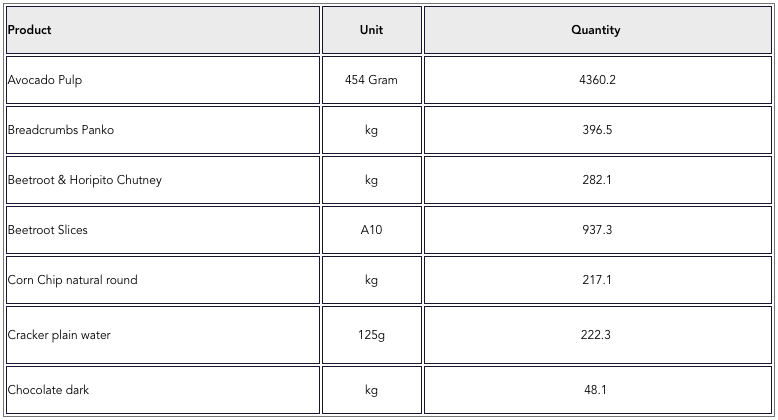
Review your spending and identify the items you’ll tender. Start with the highest-spend items. Include the current price you’re paying and your expected volume over the next 6–12 months. This becomes your baseline for comparing what suppliers come back with.
Step 2 — Calculate your purchase quantities
Suppliers need to know how much you’ll be buying to price confidently. If your business isn’t dramatically seasonal, add up the last three months of a product and multiply by two to get a six-month estimate. It’s worth the time — accurate volumes get better prices.
Step 3 — Set your supply expectations
Before you approach any supplier, document what you actually need from them. Anything important to your operations should be included in the brief. Examples:
- All goods must be able to be ordered after 10pm and delivered before 11am, seven days per week
- Any substitute items due to out-of-stock must be supplied at the original item’s price
- Orders must be receivable through your inventory management system
- Payment terms: 20th of the month following invoice
Step 4 — Write and send the tender document
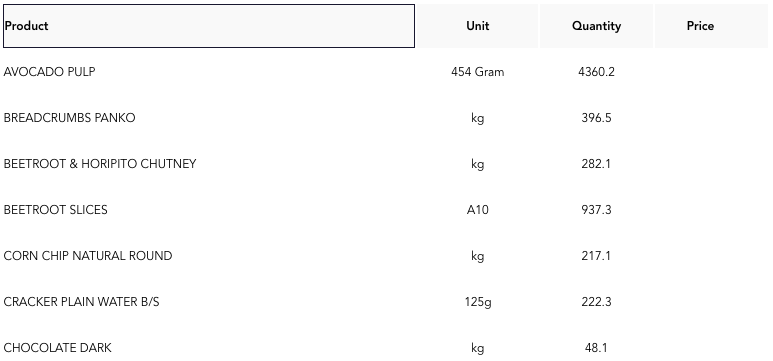
Send a cover letter with background on your business and an invitation to exclusively supply you in a specific category. Include a close date. On the following page, list the items you’ll buy, the quantities, and a blank column for the supplier to fill in their pricing.
Send the same document (“Request for Pricing” or RFP) to at least two suppliers — ideally three. Don’t negotiate one-on-one at this stage. You’re running a process, not a conversation.
Step 5 — Compare the quotes
When the quotes come back, compare on a like-for-like basis. Rather than looking at which supplier is cheaper on individual items, multiply unit prices by your volume for each item to get your total spend with each supplier. The one with the lowest total spend wins on price — though you can factor in service and quality too.

Notice here that although Supplier 2 priced lower for two items, they were more expensive overall — and the example site saved $700 by looking at the total, not individual lines.
Step 6 — Enter into a supply agreement
Once you’ve selected the best supplier, get something in writing. A basic supply agreement should contain: the term of the contract, the agreed pricing, and a commitment that you’ll purchase all products in that category exclusively from them for the term — as long as they meet your supply expectations.
Step 7 — Monitor the prices you’re actually being charged
This is the step most operators miss — and where the savings disappear. Supplier invoices don’t always reflect contracted pricing. Without a verification process, the gains exist on paper but not in practice.
Loaded has a tender report where you can compare what you’ve been paying against your contracted prices. Any variation gets raised as a credit note with the supplier. Rather than doing it line by line on every invoice, you can automate this and run one credit note at the end of each month or quarter.
Common Mistakes
Tendering once and never revisiting. Build a calendar reminder for a certain number of days before each contract expires. The savings require the process to be ongoing, not a one-time event.
Not checking invoices. The tender price is only as good as your verification process. If no one checks, you’ll drift back to market pricing within a few months without noticing.
Tendering everything at once first time round. Start with your top 10–20 items. Once those are locked in, move to the next tier. Trying to do everything simultaneously makes the process unmanageable and means it doesn’t happen.
Frequently Asked Questions
How often should you renegotiate with food suppliers?
At a minimum, review your key supplier contracts every 12 months. For high-volatility categories like proteins and seasonal produce, consider reviewing every six months. Markets change, and a price that was competitive 18 months ago may no longer be.
Can small restaurants negotiate better supplier pricing?
Yes — especially if you’re willing to provide volume estimates. Single-venue operators can negotiate effectively on their highest-volume items by offering 12-month purchase commitments. The key is being specific: “I’ll buy X kilos of Y per week for the next 12 months” is a much stronger position than “can you give me a better price?”
How do I handle negotiations if tender results are close?
Emphasise the value of a long-term partnership, potential for volume increases as you grow, and collaborative arrangements beyond just the initial tender. It doesn’t have to be all about price — there may be service or quality reasons to prefer one supplier at similar pricing.
What should a supply agreement include?
At minimum: the specific items and their agreed price per unit, committed volumes, contract duration, delivery requirements, and a provision for what happens if either party needs to change terms. A confirmed email summarising the agreed terms creates an enforceable record even without a formal document.
How do I know if I’m being charged the right price?
The only reliable way is to check every invoice against your contracted price list. If you don’t have a process for this, you’re almost certainly paying above contracted prices on some items, some of the time. See our guide on setting up a tight inwards goods process for the full system.
For the full stock management framework that connects buying, managing, and selling better: Restaurant Stock Control & Food Cost Management: The Complete Guide.
Stock Management & Food Cost Series
This guide is part of Loaded’s stock management and food cost series for hospitality operators in Australia and New Zealand. Continue reading:
- Restaurant Stock Control & Food Cost Management: The Complete Guide — the full Buy Better, Manage Better, Sell Better framework for multi-venue operators.
- Why Your Inwards Goods Process Is Costing You More Than You Think — how to protect every dollar you negotiate with suppliers.
- How to Reduce Food Waste in Your Restaurant or Bar — start with your highest-spend items and find where money is disappearing.
- What’s a Good Food Cost Percentage? Benchmarks for Australian and New Zealand Hospitality — venue-type benchmarks and why prime cost is the number that actually matters.
- Recipe Costing for Hospitality: How to Price Your Menu for Profit — how to cost recipes accurately and keep them current as prices change.
- How to Reduce Food Cost in Your Restaurant Without Cutting Portions — five levers that move your food cost without touching portion sizes.
- Why Gross Profit Matters More Than Revenue in Your Restaurant or Bar — why a busy service can still be a bad week.
- How to Price Your Restaurant Menu for Better Margins — cost-plus vs value pricing, menu engineering, and the power of differentiation.
See how Loaded can work for your business
If you’ve never seen Loaded in action, jump over and book a demo with us. 30 minutes is all we’ll need to show you the magic!


More Profit
Making money doesn’t happen by accident! Learn how to tune your business and improve your bottom-line.



More Success Stories
Get inspired by stories from real Loaded customers who run thriving hospitality businesses.



More Labour
Get tips for optimising your staff’s time, and for managing your team effectively.


.jpg)
More Culture
Making money doesn’t happen by accident! Learn how to tune your business and improve your bottom-line.



More Design
Making money doesn’t happen by accident! Learn how to tune your business and improve your bottom-line.

More Design
Making money doesn’t happen by accident! Learn how to tune your business and improve your bottom-line.

More Design
Making money doesn’t happen by accident! Learn how to tune your business and improve your bottom-line.



Season 2: Spring Bootcamp for a Money-Making Summer
We've poured our 100+ combined years of hospitality experience into a series of live and recorded webinars that will be your bootcamp for a money-making summer.